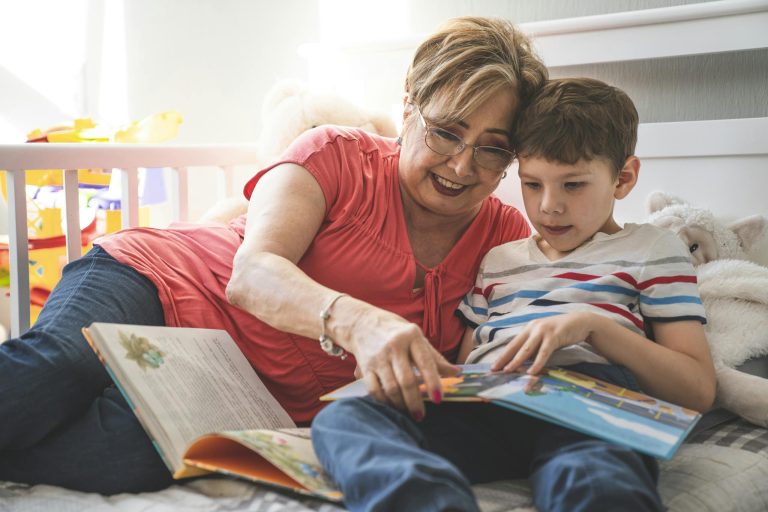
Talking to Your Grandkids About Their Family Story

It always starts with a question. Usually small. Sometimes unexpected. “Grandma, did you have a dog when you were a kid?” Or maybe, “Who was my mom’s dad?”
You pause. It seemed innocent enough, right? But how do you answer? How much do you say? How much do they need to know?
If you’re raising your grandchild, you’ve likely wrestled with this more than once. Maybe their story is tangled up in grief, or addiction, or people who disappeared without explanation. Maybe it’s just complicated.
But kids are curious. And family history matters. Especially when the people who were supposed to be in the picture… aren’t.
So how do we tell the truth…
…without breaking their hearts?
…without oversharing too soon?
…without sounding like we’re blaming someone they still love?
Pull up a chair, friend. Let’s talk about it.
Why Family Stories Matter
Children need a sense of belonging.
They want to know where they come from, even if parts of the story are messy or painful.
They’re not just asking about the past.
They’re asking, “Am I part of something?”
“Do I come from people who made it through hard things?”
When we share family stories, even the small ones, we’re telling them, You’re not alone. You come from love. And you’re being raised with care.
That matters. A lot.
What About the Hard Stuff?
Let’s be honest. Not every story is easy to share. Addiction. Estrangement. Poor choices. Some chapters still ache. Others feel too big for little ears.
But here’s the thing…
You can tell the truth without spilling every detail.
You might say:
- “Your mom had some tough struggles. She loved you deeply, but wasn’t able to care for you the way you needed.”
- “Your dad made some choices that hurt people. That’s part of why you’re with us now.”
That’s honest. It’s protective. And it’s enough for now.
You’re not rewriting history. You’re holding it gently. And you’re leaving space for more conversations later.
What to Say (and When)
There’s no perfect script. But here are a few gentle ways to begin:
💬 “Families come together in different ways. Ours just took a different path.”
💬 “You were born into a story that’s still being written. I’m so grateful I get to be part of it.”
💬 “Some parts of our past are hard to talk about. When the time feels right, we’ll share more.”
Keep it simple. Age-appropriate. And if you’re caught off guard, it’s okay to say, “That’s a really important question. Let me think about how to explain it in a way that makes sense.”
That buys you time, and models thoughtfulness too.
A Few Gentle Tips
🌀 Start with the safe stories. Tell them where you grew up. What games you played. Share the funny, the ordinary, the sweet.
🌀 Use keepsakes. A photo. A recipe card. A trinket. Something real they can touch.
🌀 Stick to what they ask. You don’t need to go deeper than the question requires.
🌀 Reassure them. Always end with, “You are safe. You are loved. We’re in this together.”
🌀 Make space for their feelings. They may cry. Or get angry. Or ask again next week. That’s okay.
These conversations aren’t one-and-done. They happen in layers… over time… when the heart is ready.
You’re Not Just Raising a Child. You’re Raising a Legacy.
Being a GrandRaiser means carrying more than groceries and backpacks. It means carrying history. Sometimes grief. And always hope.
You’re shaping a new story right now… one filled with safety, strength, and everyday love.
So when your grandchild says, “Tell me about when you were little…”
Take a breath. Share a memory.
And know that this story ~ your story together ~ might just be the one they carry forward.
Have you had one of these heart-to-hearts yet?
What did you say? What helped?
Come share your story inside GrandFamily Village. Your wisdom might be just what another caregiver needs to hear today.
🧡 You’re not alone. And your story matters.

Join in the conversation
Where grandparents who are actively raising tomorrow are finding their people